Filing a self-assessment tax return in the UK can feel complicated, especially when deadlines, forms and income details all come together at once. Many sole traders, contractors and individuals with untaxed income struggle to understand what is required and where to begin.
A clear approach makes the process much easier. This guide explains how to file a self-assessment tax return for the 2026/27 tax year, including who needs to file, key HMRC deadlines, what documents to prepare and how to submit accurately. Each step is broken down in simple terms, so the entire process becomes easier to manage and complete on time.
Key Takeaways
A self-assessment tax return is required for sole traders, contractors and those with untaxed income in the UK
The 2026/27 tax year runs from 6 April 2026 to 5 April 2027
Key deadlines include 5 October 2027 for registration and 31 January 2028 for filing and payment
Preparing documents like UTR, income records and expense receipts reduces errors and delays
Filing a self-assessment tax return online through HMRC is the most efficient and widely used method
Claiming allowable expenses correctly helps reduce the overall tax liability
Missing deadlines or reporting incorrect income can lead to penalties and interest charges
Early preparation and accurate filing make the entire self-assessment process simpler and stress-free
Note :This article was updated and republished on 23-Mar-2026 to reflect the latest information on UK self-assessment requirements for the 2026-27 tax year, including updated HMRC deadlines, filing procedures, payment timelines and guidance relevant to sole traders, contractors and individuals with untaxed income.
Who Needs to File a Self-Assessment Tax Return in the UK?
The first step is confirming whether you actually need to file a self-assessment tax return. Not everyone does and filing unnecessarily creates its own complications.
You must file if you are:
- A self-employed sole trader earning over £1,000 per year
- A partner in a business partnership
- A company director
- An individual with untaxed income above £2,500, including rental income, savings interest, tips, foreign income, or investment income
- An employee earning over £100,000 per year
- Someone who has received a notice from HMRC to complete a return
If you are unsure, HMRC’s online checker at GOV.UK can confirm your obligation quickly.
Key Self-Assessment Deadlines for 2026/27
The 2026/27 tax year covers income earned between 6 April 2026 and 5 April 2027. These are the dates that matter when you file a self-assessment tax return for this period.
| Deadline | Date |
|---|---|
| Register for Self-Assessment | 5 October 2027 |
| Paper tax return submission | 31 October 2027 |
| Online tax return submission | 31 January 2028 |
| Pay your tax bill | 31 January 2028 |
| First payment on account (if applicable) | 31 January 2028 |
| Second payment on account (if applicable) | 31 July 2028 |
Filing online gives you three extra months beyond the paper deadline. Submitting early confirms your tax bill sooner and removes the January pressure.
Note for 2026/27: If your qualifying income from self-employment or property exceeds £50,000, Making Tax Digital for Income Tax now applies.
Quarterly digital updates to HMRC are required throughout the year, with a final declaration replacing the traditional self-assessment tax return. Speak to a qualified accountant if you are affected.
What to Gather Before You Start?
Having the right documents ready before you log in saves time and reduces errors. This is one of the most practical pieces of self-assessment advice anyone can give preparation makes every step faster.
Identity and Reference Numbers:
- 10-digit UTR number (Unique Taxpayer Reference)
- National Insurance number
- Government Gateway login credentials
Income Records:
- P60 or P45 from any employers
- Invoices and bank statements for self-employment income
- Rental income records, dividend statements and savings interest certificates
Expense Records:
- Receipts and invoices for allowable business expenses including travel, equipment, professional subscriptions, use of home as office and marketing costs.
How to File a Self-Assessment Tax Return Online?
Understanding how to file a self-assessment tax return online is straightforward when you follow these steps in order.
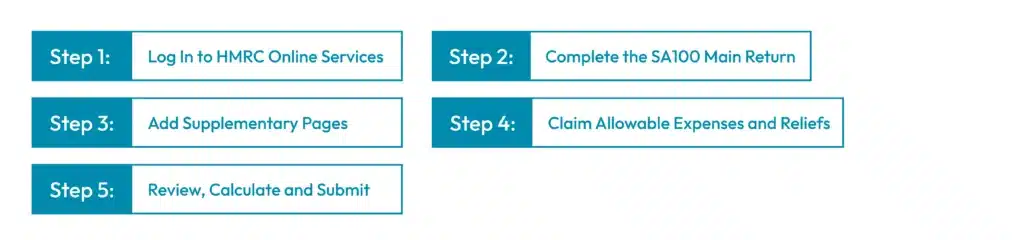
Step 1: Log In to HMRC Online Services
Access your Government Gateway account at the government of UK. If you do not have an account yet, register using your UTR number and National Insurance number. First-time users should allow up to 10 working days to receive credentials by post.
Step 2: Complete the SA100 Main Return
The SA100 is the main self-assessment tax returns form covering your personal details, income summary and tax reliefs. HMRC’s online system flags common errors as you go, which helps catch mistakes before submission.
Step 3: Add Supplementary Pages
Depending on your income type, you may need:
- SA102 for employment income
- SA103 for self-employment income
- SA105 for property income
- SA106 for foreign income
Only complete the pages relevant to your situation.
Step 4: Claim Allowable Expenses and Reliefs
Sole traders and contractors can deduct allowable expenses from taxable income, reducing the tax owed. Common claims include business travel, equipment, professional fees, phone and internet for business use, use of home as office and staff costs.
This is where errors are most common. Both overclaiming and underclaiming carry risk. If your expenses are complex or income comes from multiple sources, working with a qualified accountant removes the guesswork.
Step 5: Review, Calculate and Submit
HMRC calculates the tax owed automatically once all figures are entered. The personal allowance for 2026/27 remains £12,570. Review everything carefully, then submit and save your confirmation reference.
Paying Your Self-Assessment Tax Bill
Tax owed for 2026/27 must be paid by 31 January 2028. You can pay by bank transfer via Faster Payments, debit card through HMRC’s online portal, or Direct Debit.
If your bill exceeds £1,000 and less than 80% of your tax was collected at source, HMRC requires payments on account toward the following year, split equally between 31 January and 31 July. Late payment triggers daily interest from the deadline date.
Common Self-Assessment Mistakes to Avoid
- Missing the 31 January Deadline: Even one day late triggers an automatic £100 penalty, regardless of whether tax is owed. Daily penalties of £10 apply after three months, up to £900.
- Failing to Register by 5 October 2027: Registration is a separate step for first-time filers and must happen before you can file a self-assessment tax return for the first time.
- Forgetting to Report All Income: HMRC cross-references data from banks, employers and other sources. Accidental omissions can trigger an enquiry.
- Underclaiming Expenses: Many sole traders pay more tax than necessary by missing legitimate deductions. Good self-assessment advice from a qualified accountant at this stage pays for itself.
Conclusion
This guide has covered what is a self-assessment tax return, who needs to file one, the key 2026/27 deadlines, what to prepare, how to complete the SA100 online and how to pay on time.
For most sole traders and contractors, these steps are enough to file a self-assessment tax return correctly. But if your income comes from multiple sources, you are unsure what to claim, or Making Tax Digital affects your situation, professional support makes the process considerably easier.
Need help with your self-assessment tax return in the UK? DNS CloudCo’s chartered accountants take care of the entire process for you, accurately, on time and with a no-penalty guarantee. Get in touch for a consultation.
FAQs
What is a self-assessment tax return?
A self-assessment tax return is a form submitted to HMRC each year reporting your income, expenses and tax reliefs. HMRC uses it to calculate Income Tax and National Insurance owed on income not taxed through PAYE.
Who needs to file a self-assessment tax return in the UK?
You must file a self-assessment tax return in the UK if you are self-employed earning over £1,000, a company director, a partner, or have untaxed income above £2,500. Employees earning over £100,000 must also file.
What is the deadline for filing a self-assessment tax return online?
The online deadline to file a self-assessment tax return for 2026/27 is 31 January 2028. Missing it triggers an automatic £100 penalty even if no tax is owed.
How do I register for self-assessment with HMRC?
Register online through GOV.UK. HMRC will issue your UTR number within 10 working days. For 2026/27, the registration deadline is 5 October 2027.
What expenses can I claim on my self assessment tax return?
Allowable expenses include business travel, equipment, professional fees, phone and internet for business use and use of home as office. All must meet HMRC’s wholly and exclusively test to qualify as deductions.
What happens if I miss the self-assessment deadline?
An automatic £100 penalty applies from day one. Daily £10 penalties follow after three months up to £900, with further charges at six and twelve months. Interest accrues on unpaid tax throughout.
What are payments on account and do I need to make them?
Advance payments toward your next year’s tax bill, required when your bill exceeds £1,000 and less than 80% was collected at source. For 2026/27 they fall on 31 January 2028 and 31 July 2028.
Can I file my self-assessment tax return myself or do I need an accountant?
Most people can file using HMRC’s online system. For reliable self-assessment advice alongside filing support, professional chartered accountants handle the full process with a no-penalty guarantee included.
How long does it take to complete a self-assessment tax return?
A straightforward return with documents ready takes one to three hours. Complex returns involving multiple income sources take longer. Filing early removes time pressure significantly.
What is a UTR number and how do I get one?
Your 10-digit Unique Taxpayer Reference issued by HMRC on registration. It is required to access your Government Gateway account and to file a self-assessment tax return for the first time.

Divyanshi is a subject matter expert in the UK accounting space, creating clear and easy-to-read content for accountants and businesses. She covers topics such as VAT returns, Self-assessment tax, bookkeeping, business planning and Year-end accounts. By understanding the common challenges faced by accountants and business owners, she focuses on writing content that answers real questions and simplifies complex topics. Her approach keeps information clear, relevant and useful for everyday business needs.